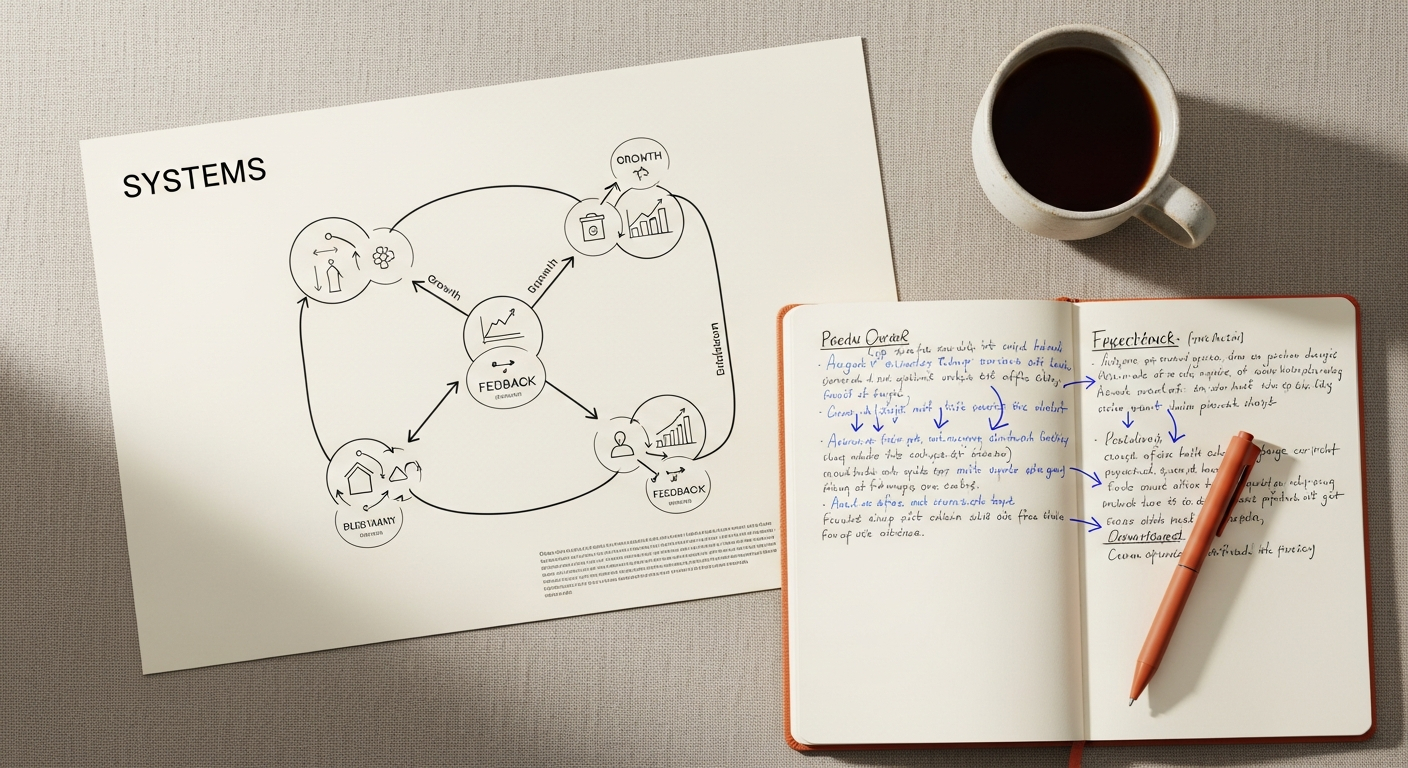
A focused diagnostic engagement that maps your product’s growth loops, retention mechanics, and engagement systems — delivering a prioritized roadmap of gamification and systems-design interventions to accelerate measurable, sustainable growth.
The Problem With Growth Advice
Most growth audits hand you a list of tactics: add referral codes, run A/B tests on onboarding, launch a loyalty program. Tactics without a systems map are guesses. They optimize locally while the broader system — the interplay between acquisition channels, activation sequences, habit loops, and monetization — remains invisible. You ship a feature that lifts one metric and depresses another, and the net effect is noise.
The Product Growth Diagnostic works differently. Before recommending any intervention, I map the system your product lives within: the reinforcing loops that drive organic growth, the balancing loops that cap it, the delays between action and feedback that frustrate users, and the engagement mechanics — or lack thereof — that determine whether someone returns tomorrow or churns tonight.
How the Engagement Works
Week 1: Discovery
Async deep-dive into your product analytics, user research artifacts, onboarding flows, and existing engagement mechanics. I interview key stakeholders — product, engineering, data, customer success — to understand not just the numbers but the narratives your team tells about growth.
Week 2–3: Mapping and Synthesis
I construct a visual systems map of your product’s growth architecture: acquisition loops, activation funnels, retention cycles, monetization triggers, and the feedback delays connecting them. Two live synthesis sessions walk your team through the map, pressure-test assumptions, and surface leverage points.
What You Receive
- Growth systems map: A detailed visual diagram of every loop, delay, and leverage point in your product’s growth architecture — designed to be a living reference your team updates quarterly.
- Gamification opportunity audit: A scored assessment of where game mechanics (progression systems, variable rewards, social proof loops, challenge scaffolding) can amplify existing loops or create new ones.
- Prioritized intervention roadmap: A sequenced plan of 8–12 interventions ranked by expected impact, implementation effort, and systemic risk — each one tied to a specific loop on the map so your team understands not just what to build but why it matters to the whole system.
- Executive summary deck: A concise presentation translating the diagnostic findings into language your leadership, board, or investors can act on.
We had eighteen growth ideas on our backlog. Amin’s diagnostic showed us that three of them touched the same reinforcing loop — and that loop was the only one that mattered for the next two quarters. We shipped those three and saw a 31% lift in 30-day retention.
VP of Growth, health-tech platform
Beyond the Deliverable
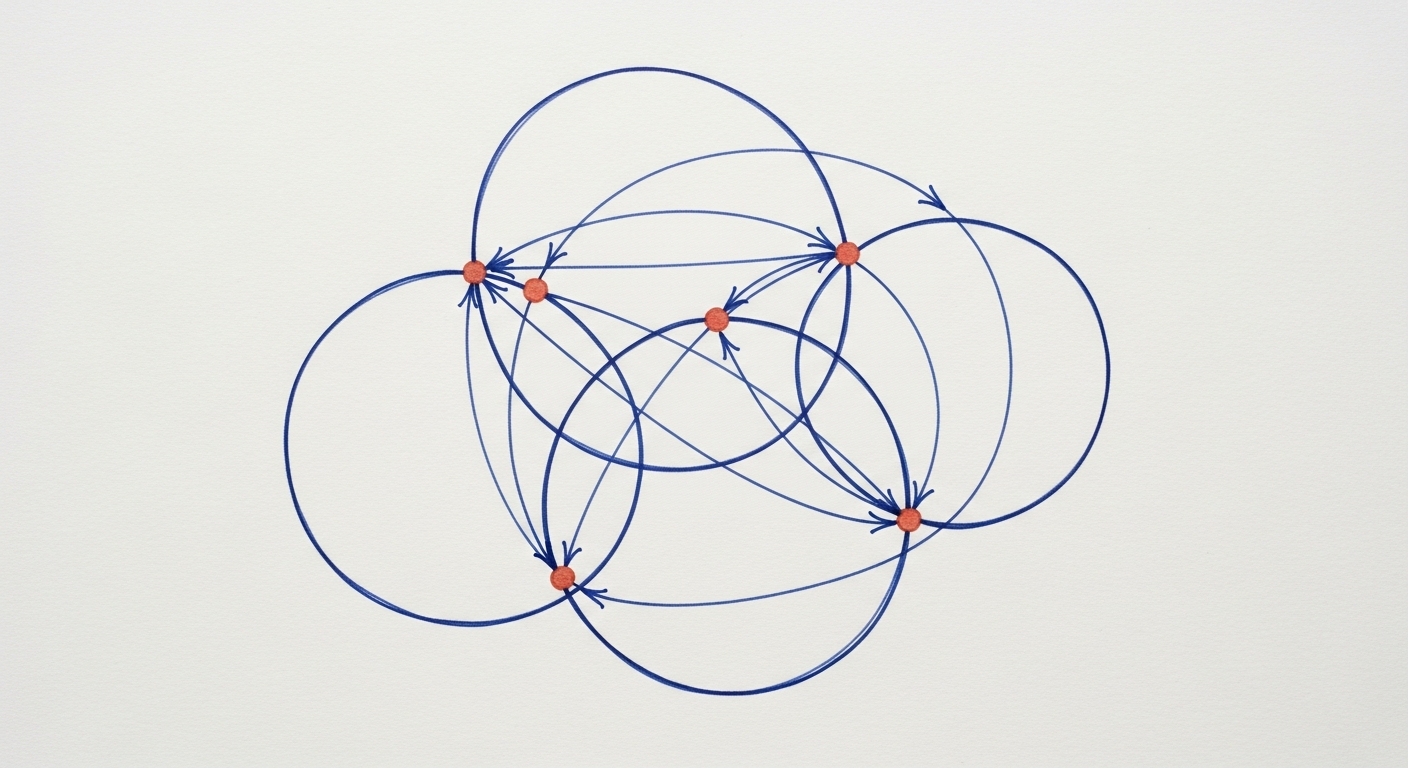
The diagnostic is designed to transfer capability, not create dependency. Every map, every scored intervention, every framework I use is documented and handed over. Your team learns to see their product as a system — to trace a retention problem back through engagement mechanics, activation quality, and acquisition channel fit — so the next strategic decision doesn’t require an outside consultant. It requires the lens you now own.