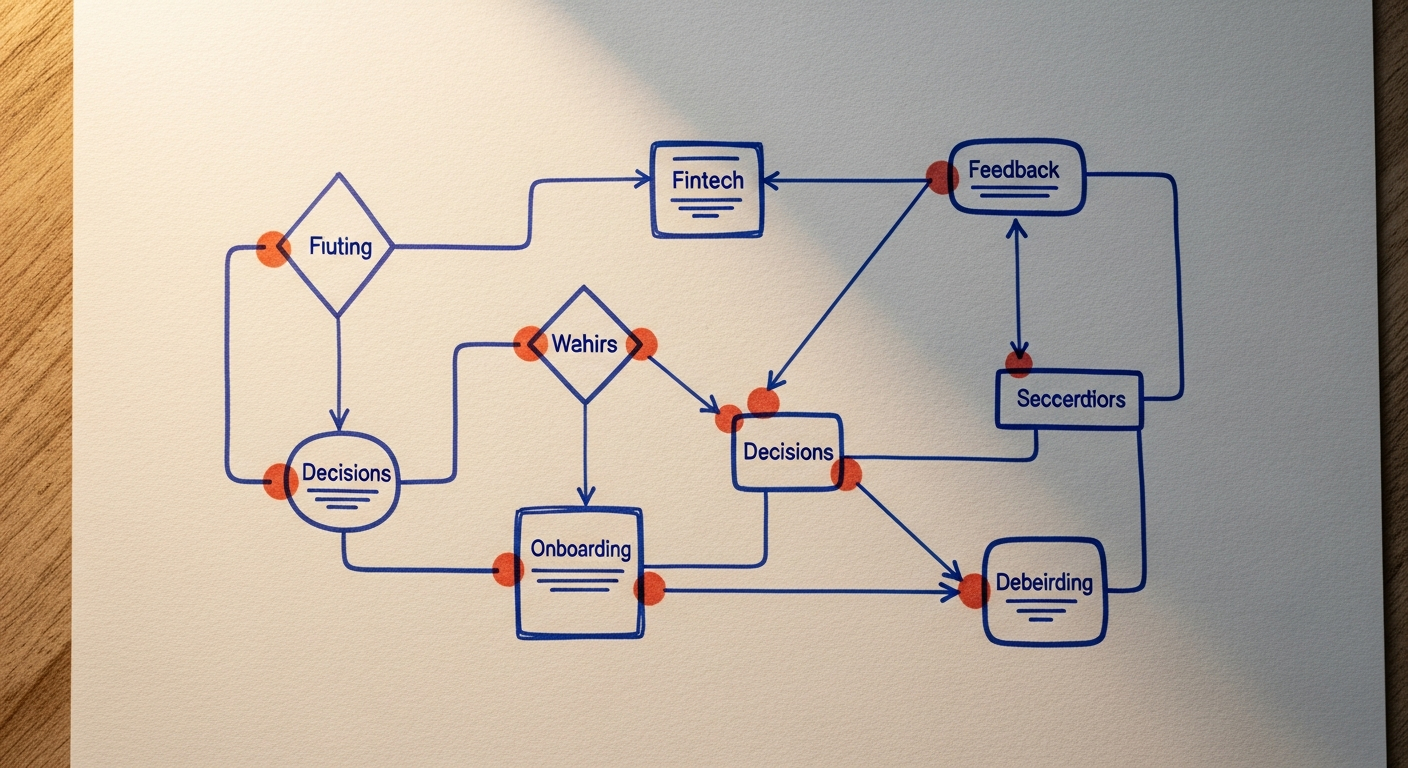
PayArc Technologies had built a powerful payments platform, but new users were abandoning setup before completing their first transaction. By mapping the onboarding flow as a feedback-loop system and introducing progressive challenge mechanics, we transformed a frustrating gauntlet into a guided journey that kept users moving forward.
The Challenge
PayArc’s onboarding required users to complete KYC verification, link a bank account, configure payment settings, and send a test transaction — a sequence that averaged eleven discrete steps. Analytics showed a steep cliff: 63% of new sign-ups dropped off before step five, and the median time-to-first-transaction was nineteen days. The internal team had tried shortening the flow, but regulatory requirements made it impossible to eliminate steps.
The real problem wasn’t the number of steps. It was the absence of momentum. Users received no signal that their effort was accumulating toward a meaningful threshold, and every interruption — an email verification delay, a pending bank micro-deposit — felt like a dead end rather than a pause in a larger arc.
The Approach
I began with a systems map of the entire onboarding ecosystem — not just the user-facing UI, but the back-end verification queues, the compliance team’s review cadence, and the notification infrastructure. This surfaced three reinforcing loops and two balancing loops that were working against the user’s sense of progress.
Feedback-Loop Mapping
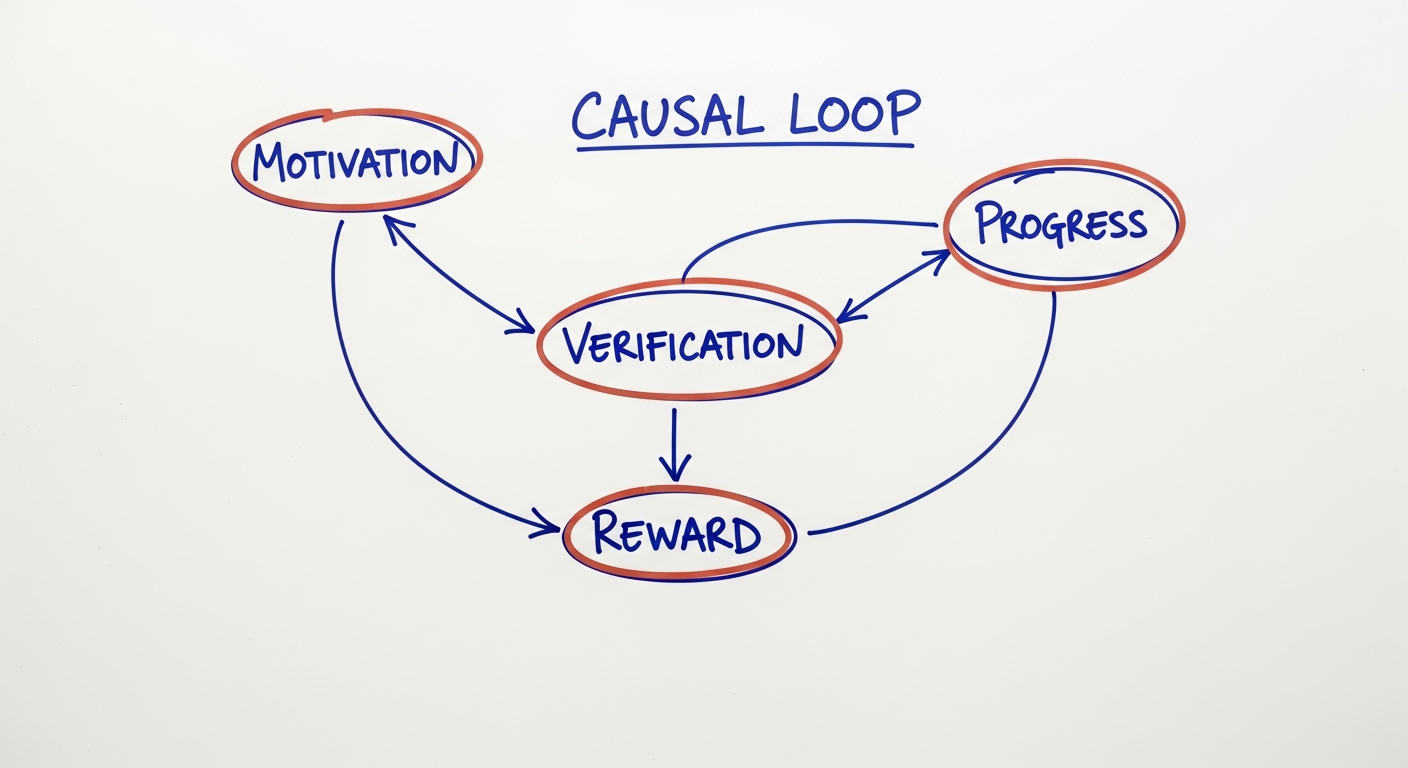
Each onboarding step was reframed as a node in a causal loop diagram. We identified that the “verification wait” step was a balancing loop that drained user motivation without providing any compensating reinforcement. The fix: introduce asynchronous micro-tasks users could complete while waiting, turning dead time into progress time.
Progressive Challenge Design
Rather than presenting all eleven steps as a flat checklist, we structured them into three “chapters” — Identity, Connection, and Launch — each with a clear completion state and a visual reward. Difficulty and cognitive load increased gradually, matching the user’s growing familiarity with the platform.
Key Interventions
- Replaced the flat progress bar with a three-chapter narrative arc, each chapter culminating in a visible “milestone unlocked” moment.
- Introduced parallel micro-tasks during verification wait periods — profile personalization, payment template setup, help-center orientation — so users never hit a wall.
- Added contextual streak mechanics: completing two steps in a single session triggered an encouraging “momentum” indicator, reinforcing continuous engagement.
- Redesigned the notification system to close the feedback loop — every back-end state change (KYC approved, bank linked) instantly surfaced in-app with a celebratory transition and a clear next action.
The Outcome
Within eight weeks of launch, 30-day retention climbed from 34% to 48% — a 42% relative increase. Median time-to-first-transaction dropped from nineteen days to seven. The compliance team reported no change in verification quality; the same checks ran, but users no longer experienced them as friction.
We didn’t remove a single compliance step. The system just learned how to keep users in motion while the necessary checks ran in the background.
Amin Ebrahimi


Leave a Reply